 DE
DE EN
EN FR
FR ES
ES PT
PT AR
AR RU
RU
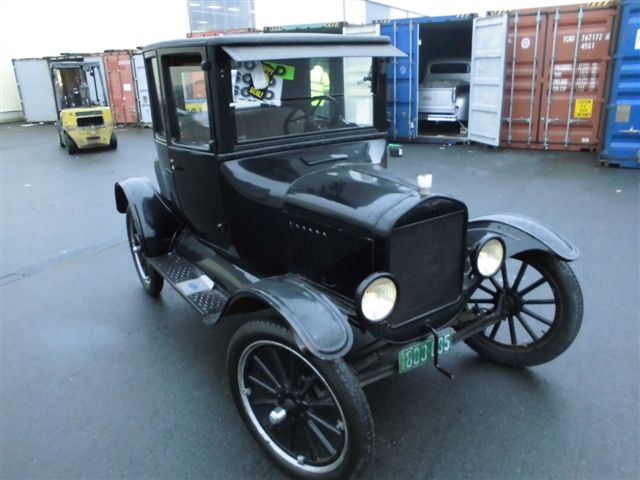
Many fans of the British royal family wish to drive like the Queen. The head of the noble family, Queen Elizabeth II, is appropriately driven to state occasions in a luxury car. The “Bentley State Limousine” was specially developed for the head of the Commonwealth of Nations and only two were ever built: one operational vehicle, one spare vehicle. The small series delivered in 2002 is based on the Bentley Arnage, which was produced from 1998 to 2010. For this British luxury vehicle, one must expect prices beyond the €30,000 mark (depending on its condition). A proud price for almost royal flair. While the Queen takes her seat in the back of the Bentley State Limousine under a panoramic roof, she occasionally drives herself. For example, she has been seen multiple times behind the wheel of the Land Rover flagship “Defender”. In contrast to the Bentley, this brand is somewhat more established on German roads. However, if one truly wants to get close to the British feeling, one needs an original from the United Kingdom – a right-hand drive vehicle.
Registration of Right-Hand Drive Vehicles
Can a true Briton even get a registration in Germany? The fact that the steering wheel is on the right or left side is no coincidence. While Germany and most of the rest of the world have right-hand traffic, the United Kingdom and countries formerly under strong British influence have left-hand traffic. In countries with right-hand traffic, vehicles are manufactured with the steering wheel on the left, and in countries with left-hand traffic, with the steering wheel on the right. The registration of right-hand drive vehicles in Germany, as well as in many other countries on the European mainland, is not a problem. However, technical modifications may be necessary beforehand. Often, the headlights need to be modified, as their diffusers are designed to illuminate the edge of the road – when using right-hand drive vehicles in right-hand traffic, one would primarily illuminate the middle of the road and massively blind oncoming traffic, which would lead to a traffic hazard. Modern vehicles can sometimes perform this process at the touch of a button, but usually, light output is lost, so these makeshift measures are rather recommended for a short holiday in the country with the opposite steering side. The rear lights must also undergo a check, as rear fog lights are either mounted centrally on the vehicle (would not require modification) or offset on the side closer to the middle of the road, which would otherwise be closer to the edge of the road. Ideally (and this is the general rule), the vehicle already has an EU type approval (COC), which can be requested directly from the manufacturer for a fee. Regardless, registration requires acceptance by a recognized testing center (TÜV, DEKRA).
Safety of Right-Hand Drive Vehicles in Right-Hand Traffic
Surprisingly, insurance premiums for right-hand drive vehicles in Germany are not higher than for conventional left-hand drive vehicles. How can this be explained?
Despite the challenging adjustment due to the change in driver’s seat and the associated change in dominant hand, right-hand drive vehicles in Germany do not show a higher accident risk. On the contrary: right-hand drive vehicles are significantly less often involved in serious accidents than their left-hand drive counterparts. The origin of this statistically higher safety is suspected to be the uncertainty perceived by the driver. The restricted visibility and the feeling of moving outside the norm and habit possibly lead to a more cautious driving style. One is less inclined to risky overtaking maneuvers or excessive speeds. While the effect in Germany is hardly measurable due to the small number of right-hand drive vehicles, this phenomenon can be clearly demonstrated in Great Britain, where a relatively large percentage of vehicles have been imported from the European mainland and are therefore left-hand drive.
So, registration is not a problem, and safety concerns also play no statistical role: all that’s missing is the right vehicle – and the necessary funds.