 DE
DE EN
EN FR
FR ES
ES PT
PT AR
AR RU
RU
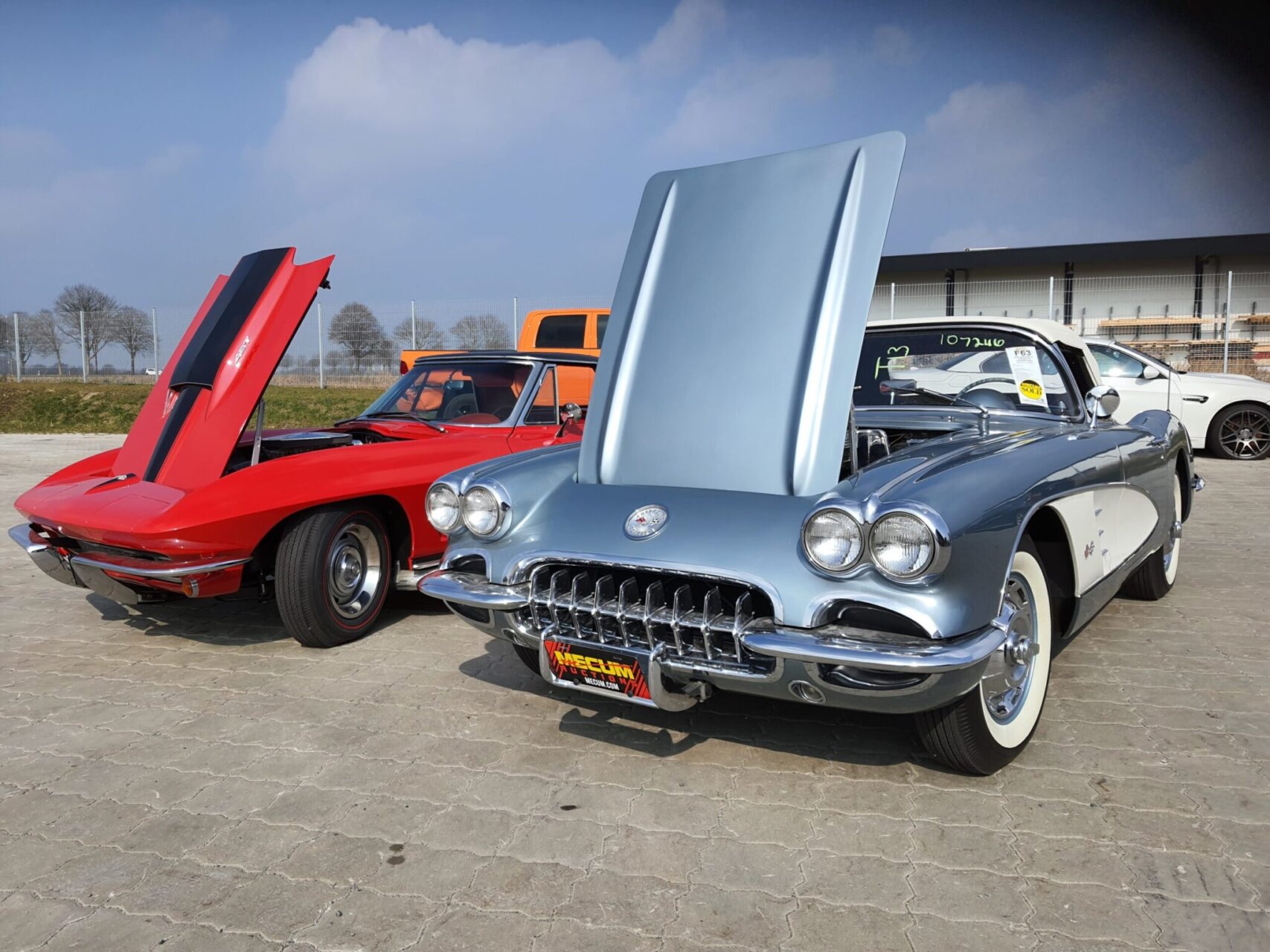
When Mustang, pick-up or Corvette roll off the ship in Bremerhaven, there are still expert reports, modifications and some paperwork between the port and the registration office. All of these must be completed in the correct order. This guide shows you what to expect and how to avoid unnecessary waiting times.
Registering a car from the USA in Germany is not a single administrative procedure, but a process involving customs clearance, modification, expert assessment and registration. The reason lies in its origin: the vehicle was built according to American standards, not European ones. The workshop and the inspector close this gap together.
As Global Logistic Group, we have been bringing American vehicles to Germany via the port of Bremerhaven for many years and have found that delays are rarely due to technical issues. More often, the problem lies in the order of the paperwork. This guide therefore arranges each step in the way it is carried out in practice, so that you can register your car from the USA without wasting appointments.
Can every American car be registered in Germany?
Basically yes. You can register an American car in Germany even without a European type approval, but the route then goes via an individual operating permit under § 21 StVZO. Manufacturers build their models for the American market according to the safety and emissions standards there (FMVSS and EPA). An EC certificate of conformity, which simplifies registration for European cars, is therefore almost never available. In its place comes a full expert report, which an expert from a technical inspection centre prepares specifically for your vehicle.
Whether your car from the USA can be registered is decided solely by the inspection organisation. It becomes difficult with heavily modified vehicles, rare models without available manufacturer data, and cars with serious prior damage. In order to be able to register a car from the USA later, it is therefore worthwhile to take a careful look at modifications and history, preferably before purchase.
The role of the US Title in registration
The Certificate of Title is the American proof of ownership. It accompanies the vehicle through export and customs clearance until you register your car from the USA. A Clean Title stands for an uneventful history, while Salvage or Rebuilt indicate a previous total loss with subsequent reconstruction.
Such a note is not an automatic disqualification if you want to register a US vehicle in Germany. The inspector will then take a particularly close look at load-bearing parts, airbags and the quality of the repair.
Registering a car from the USA in six steps
Many documents are only created along the way. Because each one builds on the previous one, the order determines whether registration proceeds smoothly or gets stuck due to missing documentation. This is what the process looks like when you register a car from the USA:
- Purchase and Title: You purchase the vehicle yourself and secure the Title in original form. The US customs authority checks it before export.
- Transport to Bremerhaven: The vehicle is collected from the seller, loaded into a container or via RoRo and shipped to Europe.
- Customs clearance: Upon arrival, customs duties and import sales tax are determined. Once both are paid, customs issues the certificate of clearance.
- Data sheet and conversion: Using the manufacturer’s data, a specialist workshop determines which parts need to be adapted.
- Individual inspection: The expert examines the converted vehicle and prepares the full inspection report.
- Registration: The registration office issues the registration certificates based on the inspection report, customs certificate, and proof of insurance, followed by the license plates.
Steps two and three are combined at our location. There is only a short distance between the quay and our warehouse in Geestland. If customs clearance has not yet been completed, your vehicle remains uncleared in the customs warehouse. Our overview of US car import shows how the transport from the seller to Bremerhaven is organized in detail.
Many who import US cars underestimate the fourth step. Workshop appointments, parts deliveries, and the inspection appointment depend on each other. This is exactly where it is decided how quickly you can register a US import car.
What documents the registration office wants to see
At the registration office counter, completeness is what matters most. If a single document is missing, the appointment is usually lost. You should have these documents ready if you want to register a US vehicle:
| Document | What it is used for | Where it comes from |
|---|---|---|
| Certificate of Title | Proof of ownership and evidence of US history | Seller in the USA |
| Purchase agreement or invoice (Bill of Sale) | Proof of purchase and purchase price | Seller |
| Customs clearance certificate | Evidence that import duties have been paid | Customs after clearance |
| Data sheet | Technical basis for the expert report | Data sheet service or manufacturer |
| Full expert report according to § 21 StVZO | Basis for individual operating permit | Technical inspection authority |
| eVB number | Proof of motor vehicle liability insurance | Your insurer |
| SEPA direct debit mandate | Collection of motor vehicle tax | Form from the registration authority |
| Identity card or passport | Identity and residence of the registered keeper | You yourself, if necessary with registration certificate |
Returnees who bring their own vehicle to Germany after years in America provide additional documentation for the import as moving goods. Whether this rule applies is decided by customs on a case-by-case basis.
The data sheet as the basis of the expert report
Without technical data, no inspector can write a complete expert report. The data sheet lists dimensions, weights, axle loads, engine power and emission values – precisely the information that will later appear in your vehicle documents.
It should be available before the workshop picks up the first wrench. Since some values determine which parts need to be replaced at all, this sequence saves double work. Testing organizations and specialized data sheet services provide the documentation for common models based on the chassis number. For exotic vehicles, the search for the data extends the time until you can register your car from the USA.
Technical conversion for US car registration
American regulations govern lighting, displays and emissions differently than European ones. You must therefore expect modifications on almost every vehicle before individual approval is successful.
To register a US car, it is worthwhile to use a workshop that regularly carries out such conversions and knows the expectations of the inspectors. This specialist company takes over the work on the vehicle; we coordinate with you when the car is transported from storage to the workshop and then to the testing facility.
Turn signals, headlights and rear fog light
Most of the modifications involve the lighting:
- Turn signals: Red rear lights that serve as both brake and turn signal lights are replaced with yellow direction indicators.
- Side marker lights: They are adjusted or deactivated depending on the design.
- Headlights: The low beam must shine with European asymmetry, and a headlight range control is added.
- Rear fog light: If it is missing, it will be retrofitted on newer vehicles.
These four points are at the top of the conversion list, because no expert will make concessions here before you can register your US car.
Speedometer and gauges in km/h
The speedometer must display the speed in kilometers per hour. Many newer models can be adjusted via software; on older vehicles, the dial is replaced or supplemented with a km/h scale.
The expert also checks warning lights and indicators, such as for airbag and seat belt. For the US car registration to work, every display must be clearly legible in the end.
Tires, exhaust and noise
Tires require European approval, recognizable by the E-mark on the sidewall, or approval for your vehicle. An exhaust report documents which emission standard the engine meets. This later also affects the amount of vehicle tax.
A noise measurement shows whether the engine and exhaust system comply with the limit values. Loud aftermarket exhaust systems are a typical reason for a second inspection round.
Registering a US vehicle in Germany: Cost overview
There is no flat rate when you register a car from the USA. How high the bill will be depends primarily on how far your vehicle deviates from European specifications. A newer model whose speedometer can be adjusted via software usually requires less effort than a classic car, for which suitable parts first have to be found. These items add up as soon as you register a US vehicle in Germany:
| Cost item | What determines the amount |
|---|---|
| Data sheet | Model, year of manufacture and availability of manufacturer data |
| Conversion | Number of components, part prices and workshop labor time |
| Full inspection according to § 21 StVZO | Scope of inspection and possible re-inspections |
| Emissions and noise certification | Existing documentation or necessary measurements |
| Transport to test facility | Short-term license plate or transport by truck |
| Registration and license plate | Registration office fees and plate embossing |
| Classic vehicle inspection (optional) | Only for H-registration, in addition to full inspection |
Customs duties and import sales tax do not belong in this invoice. They become due during customs clearance, that is, before the vehicle reaches the workshop. Because the conversion typically represents the largest individual item, it is worthwhile to obtain a list of modifications with a cost estimate from a workshop before purchasing, plus a buffer for a possible re-inspection. This way, you will know before your first appointment what budget you need to register your car from the USA.
Classic cars from the USA with H-registration plates
Classics are everyday occurrences for us, from the Mustang of the late sixties to the pickup truck from the seventies. They also require individual approval if you want to register the car from the USA. If the first registration was at least 30 years ago, an H-registration plate is also an option. For this, an expert prepares a classic car report according to § 23 StVZO, which assesses whether the vehicle is largely original and in good condition.
Some regulations depend on the date of first registration. For example, the legislator requires a rear fog light only for vehicles that were first registered from 1991 onwards. Which adjustments can be omitted for your classic car is decided by the inspector on a case-by-case basis.
If you register an older car from the USA in Germany, the H-registration plate brings a flat-rate motor vehicle tax and free passage through environmental zones. The requirement remains that the vehicle is in largely original condition. How a classic car is safely loaded and shipped is described on our service page on the topic importing classic cars from the USA.
Typical stumbling blocks on the way to a German registration plate
Most delays are related to paperwork and timing, rarely to the car itself. We encounter these errors repeatedly when customers want to register a car from the USA:
- Title with lien: It is not registered to the seller or is still burdened with a bank lien.
- Modifications without documentation: The workshop begins before the data sheet. Later work has to be redone.
- Outstanding customs clearance: As long as the duties are not paid, the certificate of no objection is missing, and with it a mandatory document for registration.
- Conflicting purchase prices: If the amount in the purchase contract differs from the payment receipts, customs will inquire.
- License plate recess too short: American plates are shorter and taller than German ones. If the long format does not fit, the registration office may allow a smaller two-line license plate.
Is this a reason to forgo the import? No, because all five points can be avoided by checking paperwork early and involving the workshop in a timely manner. So that you can register a US car in Germany without scheduling appointments twice, it is also worthwhile to have a folder with copies of all documents before the originals go to the authorities.
Frequently asked questions about registering US vehicles
How long does it take to register a US car?
There is no fixed duration. The workshop phase, available appointments at the testing facility, and shipping time have the greatest influence. If the data sheet and customs documents are available early, you can register your car from the USA as soon as the conversion has been approved.
Does every US car need to be converted before registration?
In practice, almost always, at least the lighting. The scope ranges from a few lights to the speedometer, tires, and exhaust. Without the necessary modifications, no car from the USA can be registered, not even with a clean title and excellent condition.
Can I drive to the testing facility with US license plates?
You should not rely on that. For most people registering a car from the USA, a short-term license plate is the usual way. You request it from the registration office, which will also tell you the requirements. Alternatively, a transport vehicle can bring the car to the testing facility, which is useful if the conversion is not yet complete.
Do I need the title in the original?
You should assume so. Many registration offices require the original and either keep it or invalidate it. Therefore, make copies for your records beforehand. When it comes to US car registration, the title together with the purchase contract is the central proof that the vehicle belongs to you.
How we support you when you register a car from the USA
You take care of the purchase, we handle everything after that: pickup from the seller, shipping via RoRo or container, customs clearance in Bremerhaven and, if needed, storage in Geestland. We provide you with the documents from transport and customs clearance bundled together so that the testing facility and registration office do not miss anything. Upon request, we support you beyond the individual inspection until the date when you register your car from the USA. The conversions themselves are handled by a specialized workshop.
The most important advice at the end: Think about registration already when making the purchase. Then many individual steps become a coherent process in which no document is missing. Would you like to register your car from the USA and first find out which steps are involved for your model? Markus Freiknecht and our team will advise you without obligation by phone, WhatsApp, or via our contact form.